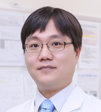
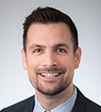
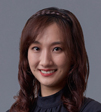
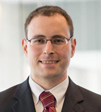
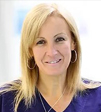
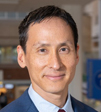
Meet the Expert 1
Capacity: 15 participants
Meet the Expert 1
Capacity: 15 participants
Meet the Expert 2
Medical Devices & FundingKorean
Capacity: 15 participants
Meet the Expert 2
Medical Devices & FundingKorean
Capacity: 15 participants
Meet the Expert 3
Transplantation AnesthesiaEnglish
Capacity: 15 participants
Meet the Expert 3
Transplantation AnesthesiaEnglish
Capacity: 15 participants
Meet the Expert 4
Capacity: 15 participants
Meet the Expert 4
Capacity: 15 participants
Meet the Expert 5
Neuroanesthesia & Delirium
English
Capacity: 15 participants
Meet the Expert 5
Neuroanesthesia & Delirium
English
Capacity: 15 participants
Meet the Expert 6
Regional Anesthesia
English
Capacity: 15 participants
Meet the Expert 6
Regional Anesthesia
English
Capacity: 15 participants
AI
Date & Venue
Nov 5 (Thu) 13:30-15:00 / Room D (Hyatt Regency)
Language
Korean
Expert Facilitator
Hyung-Chul Lee (Seoul National University)
Facilitator Biography
Director, Healthcare AI Research Institute, Seoul National University Hospital
Associate Professor, Department of Anesthesiology and Pain Medicine, Seoul National University College of Medicine
Research interests in artificial intelligence for anesthesiology and critical care, clinical data science, and physiological signal analysis
Session Overview
Artificial intelligence is rapidly transforming anesthesiology and critical care through the integration of large-scale clinical data and physiological signals. This session will introduce practical applications of AI in perioperative medicine, including predictive analytics, clinical decision support, physiological foundation models, and multimodal healthcare data platforms. We will also discuss how generative AI and AI agents can support clinical workflows, research, and education, as well as the key challenges in developing trustworthy, safe, and clinically deployable AI systems. The session is intended for clinicians and researchers interested in translating AI from research into everyday clinical practice.
Medical Devices & Funding (의료기기 개발과 연구비 수주)
Date & Venue
Nov 5 (Thu) 15:00-17:00 / Room D (Hyatt Regency)
Language
Korean
Expert Facilitator
Sung-Hoon Kim (University of Ulsan)
Facilitator Biography
Director of Research-Driven Hospital R&D Project, Asan Medical Center
Clinical Decision Support System & Medical Device Development
Session Overview
Explore a practical roadmap for clinician-led medical device innovation, covering product development and securing government R&D funding to commercialization strategies.
Anesthesiologists can actively participate in medical device research and development because we not only understand the physiological mechanisms of various equipment, but also are best aware of the unmet needs in the clinical field as end-users. This session will explore the role of anesthesiologists in the medical device development process through real-world case studies, while sharing practical experience and strategies for securing and managing government-funded medical device R&D projects, including both individual and collaborative grants supported by various government ministries.
Transplantation Anesthesia
Date & Venue
Nov 6 (Fri) 09:00-10:30 / Room D (Hyatt Regency)
Language
English
Expert Facilitator
Dieter Adelmann (University of California, San Francisco)
Facilitator Biography
Dieter Adelmann, MD, PhD, is an Associate Professor in the Department of Anesthesia and Perioperative Care at the University of California, San Francisco (UCSF), where he co-leads the UCSF Transplant Anesthesia Research Group and directs the Liver Transplant Anesthesia Clinical Instructor (Fellowship) Program. He trained in anesthesiology and intensive care, earning a PhD in Clinical Neurosciences at the Medical University of Vienna, before completing a liver transplant anesthesia fellowship at UCSF and, most recently, an outcomes research fellowship with the Multicenter Perioperative Outcomes Group (MPOG).
Session Overview
Transplant anesthesia is a small subspecialty in which randomized trials are challenging to conduct, and practice varies widely across institutions, making it difficult to generate high-quality evidence. This session traces a practical path for building that evidence: starting with a simple, single-center quality database, growing it into an institutional data warehouse, and scaling up to national multicenter collaborations through the Society for the Advancement of Transplant Anesthesia (SATA) liver transplant database and the Multicenter Perioperative Outcomes Group (MPOG). The focus is on how to get started in building research infrastructure for a niche specialty like transplant anesthesia, and how each project can provide reusable resources for the next research question.
AI
Date & Venue
Nov 6 (Fri) 11:00-12:30 / Room D (Hyatt Regency)
Language
English
Expert Facilitator
Ke Yuhe (Singapore General Hospital)
Facilitator Biography
Dr. Ke Yu He is an Associate Consultant in the Department of Anaesthesiology and Perioperative Science at Singapore General Hospital and a Clinical Assistant Professor at Duke-NUS Medical School and Yong Loo Lin School of Medicine, NUS. An A*STAR Scholar, she is currently pursuing her PhD in Clinical and Translational Sciences. Her research focuses on the intersection of artificial intelligence, healthcare economics, and perioperative medicine, aiming to drive efficiency, cost-effectiveness, and innovation in healthcare delivery.
Session Overview
The session will cover the integration of Large Language Models (LLMs) and agentic AI systems into anaesthesiology and perioperative workflows. The discussion will aim to bridge the gap between AI development and clinical utility, emphasizing how these tools can augment decision-making while maintaining high standards of patient safety.
Neuroanesthesia & Delirium
Date & Venue
Nov 6 (Fri) 13:30-15:00 / Room D (Hyatt Regency)
Language
English
Expert Facilitator
Miles Berger (Stanford University School of Medicine), Lis Evered (University of Melbourne)
Facilitator Biography
Dr. Miles Berger is a neuroanesthesiologist and translational human neuroscientist, and serves as the chief of Neuro-anesthesiology section at Stanford University School of Medicine. Clinically, Dr. Berger cares for patients undergoing brain and spine surgery, and has an interest in optimizing anesthesia care (and postoperative cognitive outcomes) for older surgical patients.
Dr. Lis Evered is Associate Professor, Department of Critical Care, University of Melbourne, Australia, and Scientific Head of Research, St. Vincent's Hospital, Melbourne. Dr. Evered is an Honorary Fellow of the Australian and New Zealand College of Anaesthetists (ANZCA). Dr. Evered has published extensively and holds many leadership appointments on scientific advisory panels, guideline development committees and relevant medical societies. Dr. Evered is Geriatric Section Editor for Anesthesia & Analgesia and reviews for several high impact journals.
Session Overview
In this session, Drs. Berger and Evered will answer questions from the audience about perioperative neurocognitive disorders and will discuss methods to improve postoperative neurocognitive outcomes for our older patients undergoing anesthesia and surgery. Drs. Berger and Evered will each offer insights on this topic and related questions based on their research in this area.
Identifying the vulnerable patient
Anesthetic management
Brain monitoring
Prevention and treatment
Diagnosis and management
Neurosurgical considerations
What are the outcomes that matter to patients?
Areas of controversy
Regional Anesthesia
Date & Venue
Nov 6 (Fri) 15:30-17:00 / Room D (Hyatt Regency)
Language
English
Expert Facilitator
Ki Jinn Chin (Toronto Western Hospital, University of Toronto)
Facilitator Biography
Dr. Ki Jinn Chin is a Professor in the Department of Anesthesiology and Pain Medicine, University of Toronto; and Regional Anesthesia Program Director at Toronto Western Hospital, Toronto, Canada. He obtained his medical degree from the University of Newcastle-upon-Tyne, UK, completed anesthesiology training in Singapore, and has dual-fellowship certifications in Neuroanesthesia (University of Western Ontario) and Regional Anesthesia (Toronto Western Hospital). His clinical and academic work centers on ultrasound-guided regional anesthesia, with particular interests in fascial plane blocks, neuraxial techniques, as well as the principles of anatomy and technical performance that underpin safe and effective nerve blocks.
Session Overview
Planning and decision making in regional anesthesia
Optimizing for safety in regional anesthesia
Identifying the real benefits of regional anesthesia
How to learn and teach regional anesthesia



 secretariat@koreanesthesia.org
 +82-2-6956-3283